Showing posts with label russia. Show all posts

Sunday, April 21, 2019

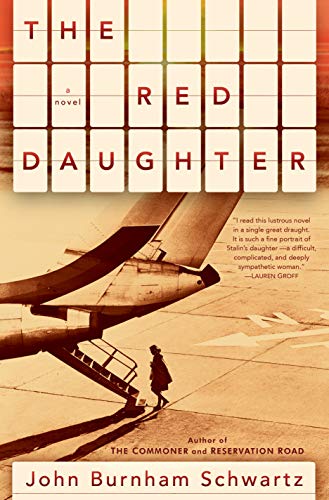
Review: The Red Daughter by John Burnham Schwartz

Release Date: April 30, 2019

Written in the style of a memoir, this is a novel about Joseph Stalin's only daughter, who defected to the US.

Perhaps due to the memoir style, there is a lot of "telling" rather than "showing", and the narrative feels very disjointed, hopping from one thing to the next and only briefly detailing important events in Svetlana's life that could have been used to really flesh out the characters and story.

I was really hoping this novel would give me great insight into a historical figure and subject matter I don't know much about but I feel like it didn't tell me much more than I could have learned from reading Svetlana's Wikipedia page.

Advanced review copy from publisher via NetGalley. My opinions are my own.


Friday, November 16, 2018

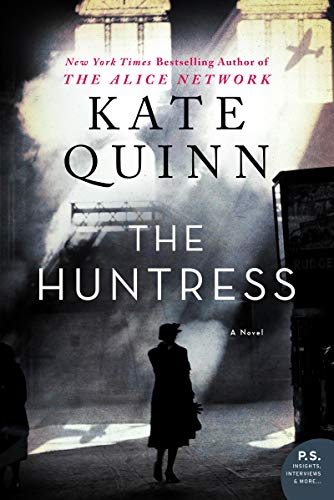
Review: The Huntress by Kate Quinn

Release Date: February 26, 2018

There are some books that are really difficult to review because it's difficult to express just how good it is, at least not without sounding like I'm gushing or fangirling all over. This is one of those books.

In the wake of WWII, an English journalist, American translator, and Russian female pilot track down a German Nazi murderess who committed horrific war crimes before fleeing to Boston where she embeds herself in an All-American family.

Kate Quinn is a master at weaving real history into fictional characters and stories. You might think the fact that they are fictional takes away from the impact of the story but it doesn't, because although the main characters are fictional, they are usually inspired by real life historical figures, and the plot based on real life historical events. And best of all, Quinn's hallmark is her strong and compelling, yet realistic heroines.

Like "The Alice Network", this one jumps back and forth in the timeline, but only over a span of about 10 years. We see the war only through Nina's eyes, a Russian pilot who grew up in the wilderness of Siberia with an abusive father. In the scenes after the war, it's told from the point of view of Ian, a former journalist turned war criminal tracker, and Jordan, a young woman in Boston who can't get passed the niggling thought that something isn't quite right with her seemingly perfect new stepmother.

It was a little frustrating to know the whole time where "the huntress" was hiding but the characters having no way of knowing that, but it did not detract from the enjoyment of the story. For a moment in the beginning, I thought maybe Nina's identity was stolen by the huntress, but then I realized that was silly, Kate Quinn doesn't really do twists like that. It's not a mystery. But it is an incredibly good story and I had great difficulty putting it down.

Advanced review copy from publisher via Edelweiss. My opinions are my own.


Wednesday, December 17, 2014

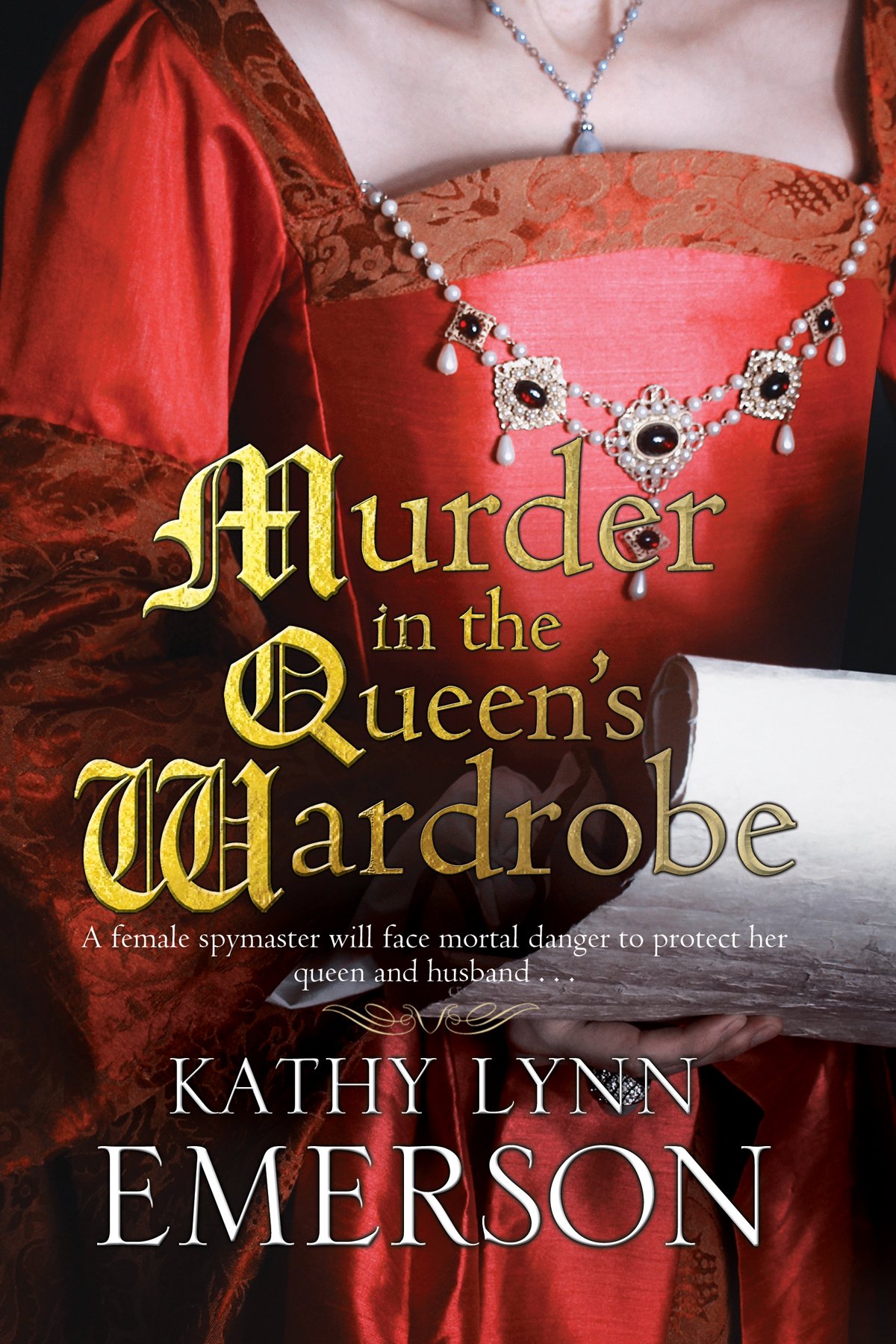
Review: Murder in the Queen's Wardrobe by Kathy Lynn Emerson

Advance review copy from NetGalley, my opinions are my own.
Release date: March 1, 2015

Rosamond Jaffrey reluctantly takes a position as lady-in-waiting to the queen's cousin, who is being courted by Ivan the Terrible, in order to gather intelligence on the matter and help keep her estranged husband safe while he's in Russia. This is a spin-off from the author's previous historical mystery series, the Lady Appleton Mysteries, and there are some mentions of events from that series but it's still readable on it's own.

It had a good premise and was reasonable well written but there was too much about this that felt contrived and the character development wasn't great. It wasn't explained why Rosamond's husband would drop this studies and go to Russia. He didn't appear to be working for the Muscovy Company (a trading company) despite spending a lot of time at their headquarters. He didn't seem to be doing anything else there except trying to help an Englishwoman caught up in Ivan the Terrible's vengeance, which wasn't the reason he went to Russia, he just happened upon her while there and she begged for his help. He couldn't have decided to vacation there, since the book makes a point of how few English people were there, as it could be a dangerous place for them. So why was he there in the first place? Because there wouldn't have been a plot otherwise, clearly.

Had it not been for this, spying and mystery of the plot would have been enjoyable but I just kept thinking back to the fact that the only reason Rosamond was involved was because her husband was in Russia and he had no good reason for being there. I just couldn't get passed this.

Rosamond wasn't very likable, she came across as self-centered, spiteful, resentful, petty, self-important, and bitter at most everyone and everything. I think this was either a poor attempt at making her seem strong and independent, or perhaps the reason for it had something to do with the original series but if so, the author should have made it more clear. The idea of giving up her finery for the plainer clothes of an upper servant repulses Rosamond and she initially turns down the opportunity to actually do something worthwhile. For someone who wants so desperately to prove she's not a "brainless female", she doesn't exactly jump at the chance to make use of her knowledge and skills. And not because of the danger, but because it would mean making small, petty sacrifices in her lifestyle for a temporary period of time. She has an opportunity to potentially make a difference to political matters, something that would be unthinkable for most women of the times, even if it is in the background by providing intelligence, but she'd rather sit at home alone and attend plays. And then she gets offended when someone calls her frivolous? While she does eventually agree to participate, she gripes about it every step of the way. And she only agrees because she's told it will help keep her husband safe, which might seem selfless but the truth is, she's motivated mostly by guilt, not love. She only married him so she could kick him out and live independently. She used him and his love for her to get what she wanted and then she tossed him aside. Her only redeeming quality is that she acknowledges this and feels remorseful about it.

I understand that she is supposed to highly value her independence because it was so rare for women of the time but instead she just comes across as a selfish, spoiled little brat. I wanted to give this book a chance because maybe the character would grow and mature. Towards the end (about 3/4 into it), she does start to show signs that she is considering the fact that the attributes she prides herself on may not be seen so favorably by others. But it's too little, too late to totally save the book.


Wednesday, March 12, 2014

Review: Empress of the Night by Eva Stachniak

Received ARC from publisher via NetGalley. My opinions are my own.
Release date: March 25, 2014

Told in third person present tense, this is Catherine the Great’s story from her own point of view, following the novel of her story told from her servant and spy Vavara's point of view. It covers the same time period that the first book did and then some, which means some scenes we have already seen before, from Varvara's point of view.

While it was good to see Catherine's take on things, I couldn't help but feel this follow up novel wasn't quite as good as the first. It is told as Catherine lay dying from a stroke which meant that often, her thoughts and memories are very erratic and there’s nothing to ground the story. Catherine jumps between the present moment and her memories with no indication and her memories are often very random and hard to link together (though they do seem to at least go somewhat in chronological order). It hurries over much of the content that we already saw in the first book, sometimes making only vague references to events in the assumption that the reader has read the first book. So if you haven’t read the first book, this will probably be hard to follow.

I also wasn't expecting it to be in present tense since the first book was not. I'm not a huge fan of present tense and while I do think it added to the feeling of being in Catherine's dying head as she is going over her life, I still don't love it.

However, I do think it was worth reading and seeing Catherine's thoughts and emotions which we didn't really get to see in the first book, and also more of Catherine's later life which we previously didn't see at all. There is a lot more about Catherine's son and grandchildren in the second half of this second installment, though only through Catherine's eyes, it added dimension to the story and was worth reading.

This is definitely more of a companion book than a sequel and it almost could have been trimmed down and integrated into the first book instead, to alternately show Varvara's and Catherine's point of view at the same time. So it's definitely not a stand alone book and I don't recommend it if you haven't read the first book but if you have, I do think the second is worth reading.


Saturday, January 18, 2014

Review: The Winter Palace by Eva Stachniak

This is an excellently written novel about Catherine the Great, Empress of Russia, told from the first person point of view of a palace maid, Varvara, a fictional character from Poland. After being orphaned, Varvara becomes a ward of the Empress Elizabeth of Russia where she is forgotten about within the Winter Palace until she is discovered by the Chancellor as a potentially good spy. He trains her to spy for him and the Empress, who places her in an ideal position as a maid to her nephew, the Grand Duke and heir to the Russian throne, but when Catherine (initially known as Sophie) arrives to be married to the Grand Duke, Varvara's loyalties are thrown into question.

This is as much Varvara's story as it is Catherine's and truth be told, Catherine is absent for portions of the novel and yet, that doesn't detract from the story. It's so well written and the characters are so well developed that the fictional plot lines are every bit as interesting as the historical ones and only add dimension to the story. However, for those disppointed that the focal point was not more centered on Catherine, the sequel Empress of the Night is told from Catherine's point of view.

From Varvara's point of view, Catherine seemed a little whiny and immature at times, though she would have been in her 20s by the time the scene I'm thinking of in particular would have occured. In fact, Catherine's character sort of regresses; in the beginning, she is shrewed and cautious but as the book goes on, she becomes reckless and immature. I think this was an attempt to show how unhappy she became in the situation she was in and how she reached a point when she just didn't care anymore about the things which she previously thought of the utmost importance.

For a spy novel, the politics sometimes take a back seat to the court gossip but I think it's important to remember that during this time period, court intrigue and politics were so often linked.

I was surprised to learn the author is Polish, because this is so well written in English, I can't believe that it's not the author's first language. It really brings the scenes to life and forms the characters so well, it was hard to put down and I look forward to the sequel.


Related Posts Plugin for WordPress, Blogger...