Showing posts with label 15th century. Show all posts

Tuesday, January 23, 2018

Review: The Tudor Bride by Joanna Hickson

A sequel to The Agincourt Bride, about the latter portion of Catherine of Valois' life. It's as good as the first, and again written in first person from the point of view of Catherine's servant, Mette. It dragged a little bit in the middle, the beginning and end were much more eventful, but I suppose that was to be expected given that not much was going on in Catherine's world at the time. Still, it manages to hold your interest and the ending was moving.

I still think it might have been better written in third person or from multiple character's points of view. Limiting the narrative to one character who was normally by Catherine's side, but not always privy to everything going on felt a little like you didn't get to see everything.

Overall, a read good and good follow up to The Agincourt Bride, though it could be read as a stand alone, if you enjoyed the first book, definitely read this sequel.


Sunday, September 3, 2017

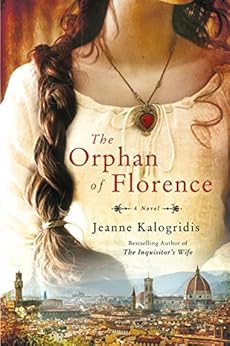
Review: The Orphan of Florence by Jeanne Kalogridis

Release Date: October 3, 2017

This fast paced novel involving Jewish mysticism follows a foundling pickpocket who winds up apprenticing with a Jewish magician in Renaissance Florence, not realizing he holds the key to her past, or what kind of danger she's landed herself in when she gets involved in the war between Lorenzo de Medici and the Pope.

It seemed a little unrealistic at first, but then things come together. Well written and plot driven, the action, espionage, and mystery keeps you wanting to know more. I liked the characters but wasn't extremely attached to them - sometimes the main character was a little slow to realize what was going on. I felt like the mysticism was a little heavy handed but I guess that's just Kalogridis' style. Over all, a quick, enjoyable read, but don't expect too much from it.


Advanced review copy from publisher via NetGalley. My opinions are my own.


Friday, June 20, 2014

Review: The Agincourt Bride by Joanna Hickson

The Agincourt Bride by Joanna Hickson is more of what The Forbidden Queen by Anne O'Brien should have been (read my full review of Forbidden Queen here). Both novels are about Catherine of Valois but Agincourt Bride is a more multidimensional story of politics and court intrigue told from a woman’s point of view with better developed characters, whereas Forbidden Queen is a flat, one-track romance with a whiny, annoying main character. In Agincourt Bride, we get to see many of the characters develop, whereas in Forbidden Queen, we really only see Catherine and her love interests develop and even that is very one dimensional. However, Agincourt Bride is not without its flaws as well.

It tells Catherine’s story from the first person point of view of her nursemaid (and later, Keeper of the Robe), Mette. This winds up being a little limiting in terms of telling the whole story when letters written by Catherine to her brother are inserted in order to give us glimpses into her side of the story. The letters just felt too deliberately planted and are a testament to the drawbacks of writing in first person. Additionally, perhaps because we are seeing all the characters through Mette’s eyes, Catherine is portrayed as saintly while practically everyone else in the story is mean-spirited or even evil. Even some of the protagonists, like Catherine’s brother Charles, are not portrayed in the most favorable light. It seems only Mette and Catherine’s loyal friend from the convent, Agnes, (and later, Mette’s daughter) are goodhearted people who care for Catherine or treat her with any kind of respect. And yet despite this, we don’t really get to know Agnes very well. Despite she and Mette being Catherine’s most trusted friends and supporters and therefore constantly being around one another, they don’t really have any kind of relationship. That’s not to say they dislike each other, just that the only mention Mette makes of what she thinks or feels about Agnes is when she first meets her and decides that anyone devoted to Catherine is alright by her. To the reader, Agnes winds up feeling like a tacked on character who exists purely because the story occasionally needed another character who had Catherine’s best interests at heart.

Regardless, the overall story is still enjoyable and certainly had it’s strengths. In history, Catherine of Valois was a powerless pawn in the complicated politics of the Hundred Years’ War and the Wars of the Roses. Particularly in her time before and during her marriage to Henry, she didn’t really do anything significant except give birth to the next King of England. Therefore, she was always going to be a difficult subject to write about, particularly when it comes to her early life, while still making her story interesting and her character likable, yet Hickson pulls it off. We are shown a woman who faces her fate bravely and wisely, even if she’s had no say in what direction her life will take. Hickson manages to create nearly an entire book out of Catherine’s life before she even married Henry V. While I’m not sure how much of the more intimate details are accurate (I’m certain some liberties were taken), it shows the turmoil that France was in at the time and how Catherine was caught up in it, something Forbidden Queen was seriously lacking. We get to see all of Catherine’s siblings develop and here was where Mette’s point of view was very beneficial, because we got to know Catherine’s siblings as children, when Catherine was too young to really know them, and again later as adults. Catherine’s mother plays a strong side role and we also occasionally see her mentally ill father. Burgundy plays a large role as the antagonist, with much of the politics centering around him. Henry is only really prominent in the last quarter of the novel but he was among the more complex characters.

So the story had its strengths and weaknesses but if you’re looking for a novel about Catherine of Valois, this (and likely its sequel, The Tudor Bride, due out in the U.S. March 2015 and already available in the U.K.) is definitely the better choice than The Forbidden Queen. I will likely read the sequel because I’m curious what the author will make of it. If she can make Catherine’s life before marriage this eventful, I definitely want to see what she can do with the latter portion of Catherine’s life.


Monday, April 7, 2014

Review: The Serpent and the Pearl by Kate Quinn

This is the story of the infamous Borgia family as told from the first person points of view of Giulia Farnese, the Pope’s mistress, and her cook Carmelina, and bodyguard Leonello. The addition of these latter two fictional characters was welcome, since without them it would have been a rather flat, one dimensional romance story. But Carmelina and Leonello’s stories give us a glimpse into the commoner’s world and allowed the author some more creative freedom. Meanwhile, Giulia’s point of view (and a little of Leonello’s and Carmelina’s too) gives us a window into the world of a very complex and fascinating family.

At times, some of the characters seemed a little too modern but they were compelling characters who made their stories really come to life. The protagonists are flawed but likeable and some of the characters continued to surprise me. I really enjoyed watching Giulia grow up and figure out what is important to her. I enjoyed waiting for the inevitable to happen when Carmelina’s past caught up with her. Though Leonello’s character did remind me of Tyrion, the author swears she had developed his character before she read Game of Thrones (and for those who haven’t read Game of Thrones, the character Tyrion is similar to Leonello). In a way, that is a testament to how good the characters in this novel are: great minds think alike, after all.

Although the novel was written in first person multiple points of view, which I don’t normally love, I hardly even noticed it, perhaps because it was just so well written that it didn’t matter. I think what I enjoyed most about this novel, apart from the characters, was the attention to cultural detail, not only in the food descriptions (which have been praised enough in plenty of other reviews, so I won’t repeat them) but also with elements such as the mentions of different accents and dialects. It’s easy to think the book is set in Italy so the Italian characters would all have Italian accents - but with Quinn’s attention to detail, characters notice when another character has a Venetian accent instead of a Roman accent. It’s this kind of attention to detail that brings the setting to life and does it with ease; the descriptions are full and rich but you’ll never feel like they bog down the story. The plot certainly isn’t neglected even amid all these rich descriptions and characters. While Giulia initially spends much of her time sitting around beautifying herself for her Pope in the beginning, we get to watch Carmelina come into her own in the kitchens, and Leonello attempts to investigate a serial killer. But Giulia is more than just a trophy mistress and she proves it in the second half.

It ended on a cliffhanger though, so if you’re the type of person who hates that, this might not be for you. However, the second book is out now so if you’re happy to just immediately pick up the second book, the cliffhanger shouldn’t be a problem. I bought the sequel literally the moment I finished this one, I am really looking forward to where the author takes the sequel.


Saturday, January 25, 2014

Review: The Forbidden Queen by Anne O'Brien

Advanced review copy from publisher via NetGalley.
US release date: January 28, 2014

This biographical novel about Katherine of Valois, queen consort to Henry V of England and later the wife of Owen Tudor, is well written but doesn't have much depth and there is a lot more "telling" than "showing".

It's primarily a romance and though I enjoy some good romance, when there seems to be little to nothing else going on, it feels flat and grows tiresome and dull. It was entirely about Katherine's romantic relationships, even though there was plenty of opportunity to develop a more multidimensional story, it never took fruit. For example, Katherine's childhood is very quickly brushed over. Growing up, her only friend in the whole world is her sister, Michelle, but when Michelle leaves the convent they are being raised in to be married off, it barely gets a mention. What should have been a huge and difficult change and loss for Katherine only gets commented on after the fact, almost as in afterthought. I also found it very convenient (i.e., unrealistic) that Michelle happened to live close enough by to make regular trips to visit Katherine. Even so, Katherine should have missed Michelle a lot more than we get to see, if not when Michelle is married than certainly when Katherine is married and leaves France for England.

There also could have been a lot more development in showing Katherine adjusting to life at the English court and trying to fit in. While she does make a few friends, we don't see much of them. I would have liked to see more of her dealings with her "damsels", especially in the beginning, because they would have been a huge part of her life, regardless of whether her relationships with them were positive or negative. But we really only see few glimpses of this because the focus was so centered on her romantic relationships. Later, we see a little more involvement but no more than is necessary to move the romantic stories forward.

According to Katherine, in her time as an English queen, she makes it a point to learn about the political affairs going on at the time but we don't really get to see that growth, we just have to take her word for it. As time goes on, she only proves just how poor her understanding of politics is and that she clearly did not learn much during her reign as consort.

Most annoying of all was how whiny, immature, and self-absorbed Katherine was. I could excuse it in the beginning because she was young and starved for attention and love. But she never seemed to grow up. While her time with Henry was short lived, I grew frustrated when she could never accept the fact that when you're married to a king, certain things will take priority over you. She could not see beyond her own little world. Her happiness seemed entirely dependent on attention from men, which made her seem shallow and vapid, in addition to immature and self-absorbed. At one point, Katherine even asks herself: "Was every woman as driven to embrace misery as I, when faced with a man who had no desire for her?" The answer, of course, is "no". No, Katherine, not every woman feels that way and the fact that you do is actually rather pathetic. I won't pretend rejection is a barrel of laughs but the degree of misery that it sunk her into was certainly pathetic.

Also annoying was when, by her own admission, she knew nothing about Owen Tudor beyond the fact that he was good at his job, and yet claimed to have fallen in love with him. How can you love someone you don't even know? Even after she professed to have grown up and been wiser, she is still resorting to an immature ideal of love.

The quality of writing is not bad and the characters, though mostly unlikable or underdeveloped, were believable, as was their dialogue. But the story was one-dimensional and Katherine in particular was not a likable main character, which was made all the more annoying by the fact that it was told from her first person point of view.


Monday, November 25, 2013

Review: The White Princess by Philippa Gregory

It’s no secret that I felt The Other Boleyn Girl was overrated. But I requested a free review copy of The White Princess, a novel based on the life of Elizabeth of York, wife of Henry Tudor (Henry VII) and mother of Henry VIII, because I thought I should give Philippa Gregory another chance. After all, other readers in my family enjoy her novels and I value their opinions.

It’s written in present tense which I’m not a huge fan of because I find more often than not, it comes off sounding pretentious but admittedly, this is well written and it’s the one thing I can’t criticize her for. It’s also written in first person and here again, I can’t criticize Gregory’s ability to write well in first person, but I felt like the nature of it is too restrictive, especially for this complex subject matter. However, what really let this book down was the characterization, mainly of Elizabeth.

For starters, I could not understand how she could be in love with the man who kidnapped and imprisoned her brothers and then declared them, along with herself, illegitimate so he could steal their crown. Elizabeth seems to think he had no other choice but I’m not buying this “woe is Richard” attitude. She also seems to think that if Richard had won at Bosworth, he would have married her but the fact is, he could not marry a bastard and he could not re-legitimize her without admitting that he was wrong to declare her brother illegitimate and thus, admitting that he was a usurper and not the lawful king. I could maybe excuse Elizabeth’s expectations with Richard as youthful ignorance but even her mother seems to agree Richard would have married her had he survived. So this struck me as Gregory not fully understanding the situation or perhaps just choosing to disregard the reality of the situation to suit her fanciful story. I don’t mind using a creative license in novels but it has to be believable and it’s this kind of disregard for realism that makes it difficult to enjoy. For example, I’m okay with Gregory claiming that when Elizabeth’s family took refuge in Westminster Abbey, it was in the dark, damp “crypt under the chapel” even though in reality, they stayed in the luxurious house where the Abbot lived, in his best rooms as his guest. I’m okay with that because while it’s untrue, it’s not completely unbelievable that had the Abbot not been so accommodating, they might have hunkered down in a section of the Abbey where they could secure their safety. So I’m okay with using this idea as dramatic license, but I’m not okay with things that don’t even make sense within the contexts of Gregory’s own fiction. She makes a point of showing how Henry had to legitimize Elizabeth before marrying her because a king can’t marry a bastard so why would this not apply to Richard as well?

What bothered me about The White Queen miniseries (and I suspect of the book as well, which precedes The White Princess) was the portrayal that the women involved were the true engineers of these pivotal moments in history and the men were practically just their pawns. I enjoy stories about strong, influential women in history and how they cope with the turbulent events they often get caught up in, but I feel like Gregory’s portrayal of this is very unrealistic. However, Elizabeth of York was in a very different situation than her mother had been and so The White Princess took the opposite approach and portrayed Elizabeth as a victim and pawn of Henry Tudor and Margaret Beaufort. But Elizabeth does nothing to win favors or gain influence and spends most of the book clueless and passive. Apparently, there's no middle ground with Gregory - women either engineer everything or have no influence at all. Even Henry himself, after Elizabeth responded with “I don’t know” to all his questions, appropriately tells her:
“When I think of the fortune that was spent on your education, Elizabeth, I am really amazed at how little you know.”
I realize that he suspected she knew more than she was admitting but that’s the frustration thing, with one exception, she really didn’t know anything. And while I understand why she doesn’t know anything, the fact that it’s written in first person means the reader doesn’t know anything more than Elizabeth does, which makes for a frustrating read. Here is where third person would have been beneficial and there were many people around Elizabeth whose stories we got tantalizing glimpses of and would had really added more dimension to the story had we been able to see them.

I can also understand why Elizabeth wasn’t scheming and plotting in league with her mother, but I can’t understand why Elizabeth does nothing to improve her own situation. If I were Elizabeth, no matter how much I hated Henry, I’d be doing everything I could to convince him that he can trust me so that perhaps I could have more influence over him. But Elizabeth never even considers this.

Eventually, she does come to care for Henry but I struggled to understand why. He spends most of the book demanding to know what she knows (which is nothing, of course), sulking or throwing a tantrum when yet another “York boy” pops up, and cowering behind an army he has no faith in. He is driven half mad by fear, which is understandable, but it’s hardly going to make a woman fall in love with him. On Henry’s end, he claims to have hoped for Elizabeth’s love from the first moment he met her but again, I’m not really sure why since she is dull and clueless and spends most of the book turning away from him. Henry goes on and on about how she has some kind of inherent likability that all Yorks do and which eludes him, but apart from being pretty and smiling and waving at crowds, I couldn’t see what was so likable about her. It’s not enough to say a character is this or that, if you don’t show me, it falls flat.

I really thought we were going to see a woman who was quietly influential in the shadows of not only her husband but her growing son Henry as well but instead we get a girl who has basically given up on life and is just passively enduring it.

Then there’s Henry. I felt like Gregory’s attempts to paint him as multidimensional missed the mark. On one hand he is cold, calculating, and untrusting but on the other hand he almost immediately begins readily opening up to Elizabeth about his insecurities and fears, despite the fact that she has done nothing to coax this out of him and despite the fact that he never trusts her. Making a character multidimensional doesn’t mean having them do things that don’t make sense.

I get that this is supposed to be a story about a woman who was forced to ride the line between two warring factions and how she was powerless to stop the people she loved on both sides from destroying one another. I get that it’s supposed to be about a man who is barely able to cling to a throne that was never his and how it will haunt him for all his days. In theory, it sounds like a great story but it just wasn’t executed very well.


Saturday, October 12, 2013

Review: Elizabeth of York: A Tudor Queen and Her World by Alison Weir

UK Release Date: November 7, 2013
US Release Date: December 3, 2013

I was thrilled to receive this as an ARC from the publisher via NetGalley because I have a lot of respect for Alison Weir, her history books being so detailed, comprehensive, and extensively cited. I was particularly curious to see what she had to say about Elizabeth of York, a woman who always seemed an elusive figure to me. Was she just a pawn in the final acts of the Wars of the Roses? How did she really feel about her uncle? About her husband? Who did she think responsible for the disappearance and presumed death of her brothers? There are so many questions surrounding her and I was eager to read Weir’s take on these questions. And she didn’t disappoint, while there have been other dedicated biographies on Elizabeth of York, none are as extensive as this and Weir tackles many of the common questions about Elizabeth without hesitation. Of course, she’s limited by how little is known about Elizabeth and Weir often can only make suggestions or put forward theories but she is always clear when doing so.

It’s worth mentioning that Weir was writing this while Richard III’s remains were being discovered which means she was able to incorporate new conclusions from this. Apart from Langley’s book on the dig, Weir’s is the first I know of to include this, which made it all the more intriguing.

Naturally, the period covering the Wars of the Roses is the most fascinating but it’s definitely a must read for anyone interested in the Wars of the Roses or Tudor history.


Friday, September 20, 2013

Review: The King's Grave: The Discovery of Richard III's Lost Burial Place and the Clues It Holds by Philippa Langley and Michael Jones

Received ARC from the publisher via NetGalley.
Release date: October 29, 2013

I was eager to read this because the discovery of Richard’s grave was an incredible moment in history and I wanted to learn more about it and how it changes what we know of Richard.

The information about the dig was very interesting and exciting to read about. But Langley’s obvious bias was thick throughout much of the book. She accuses Vergil of having an “all too apparent bias”, which is not a completely unreasonable comment but in the past, the same thing was said of Rous’ comments about Richard’s “hunchback”, which turned out to be based in truth. I am aware that scoliosis is not what we now consider a true hunchback but in the Middle Ages, there would have been little to no distinction, they likely would have called any spinal deformity a "hunchback", particularly a "severe" case like Richard's. But this fact is totally overlooked in the book. Langley admits that when she first heard the word "hunchback" after finding the skeleton with the curved spine, she was devastated to think it would validate all the negative accounts of Richard. But the moment she finds out it was scoliosis instead of kyphosis, she dismisses any possibility that this should still throw other presumed “propaganda” into some question too. If the legend of his hunchback was based in fact, what else that she is dismissing as propaganda might actually have some truth to it?

Additionally, going back to Vergil, she later uses his more positive comments about Richard's sharp wit to show how intelligent Richard was. While I'm not denying that Richard was intelligent, it just seems to me that Langley is picking and choosing which Vergil comments are accurate and which aren't purely to suit her agenda.

Langley claims that she never wanted to paint Richard as a saint but she proves herself wrong on that account every step of the way. That said, it appears that co-author Michael Jones was brought in to attempt to counterbalance Langley's bias. When it comes down to it, the official line in the book regarding the fate of the princes in the tower following an attempt to break them free says:
"On the basis of all the material available we do not know what happened to the princes. (This is an issue where the co-authors disagree - for this, see the debate in Appendix 1.) But there is strong circumstantial evidence that Richard now ordered their murder, possibly on the advice or yielding to the persuasion of Buckingham - as most people thought at the time."
So in the end, I did feel that the book attempted to be objective and put forward more than one viewpoint, but Langley's bias still managed to shine through much of the book. Also disappointing is that while the book names several sources within the text, there are no citations throughout the book and so most of the historical accounts, particularly Langley’s take on the (non-medical) details of how Bosworth went down, are completely unsourced.

(For the record, I do think Richard is most likely suspect in the murder of his nephews but I don’t think that necessarily makes him evil and I do agree there was negative propaganda put out about him too).


Related Posts Plugin for WordPress, Blogger...